A decade ago, buying an all-terrain tire used to be an uncomplicated task. Buy some KO2s and be done with it. When the KO2 launched in 2014 it became an off-road staple. Its CoreGard technology made its sidewalls tougher than the original KO, dramatically reducing sidewall failures, and tread life doubled on gravel compared to the outgoing model with a slight improvement on asphalt. It was good enough for Ford to spec as OE on the Raptor and for Jeep to put it on their iconic Wrangler Rubicon. The serrated shoulder became the visual shorthand for “I go off-road” even if the truck wearing them was a mall crawler.
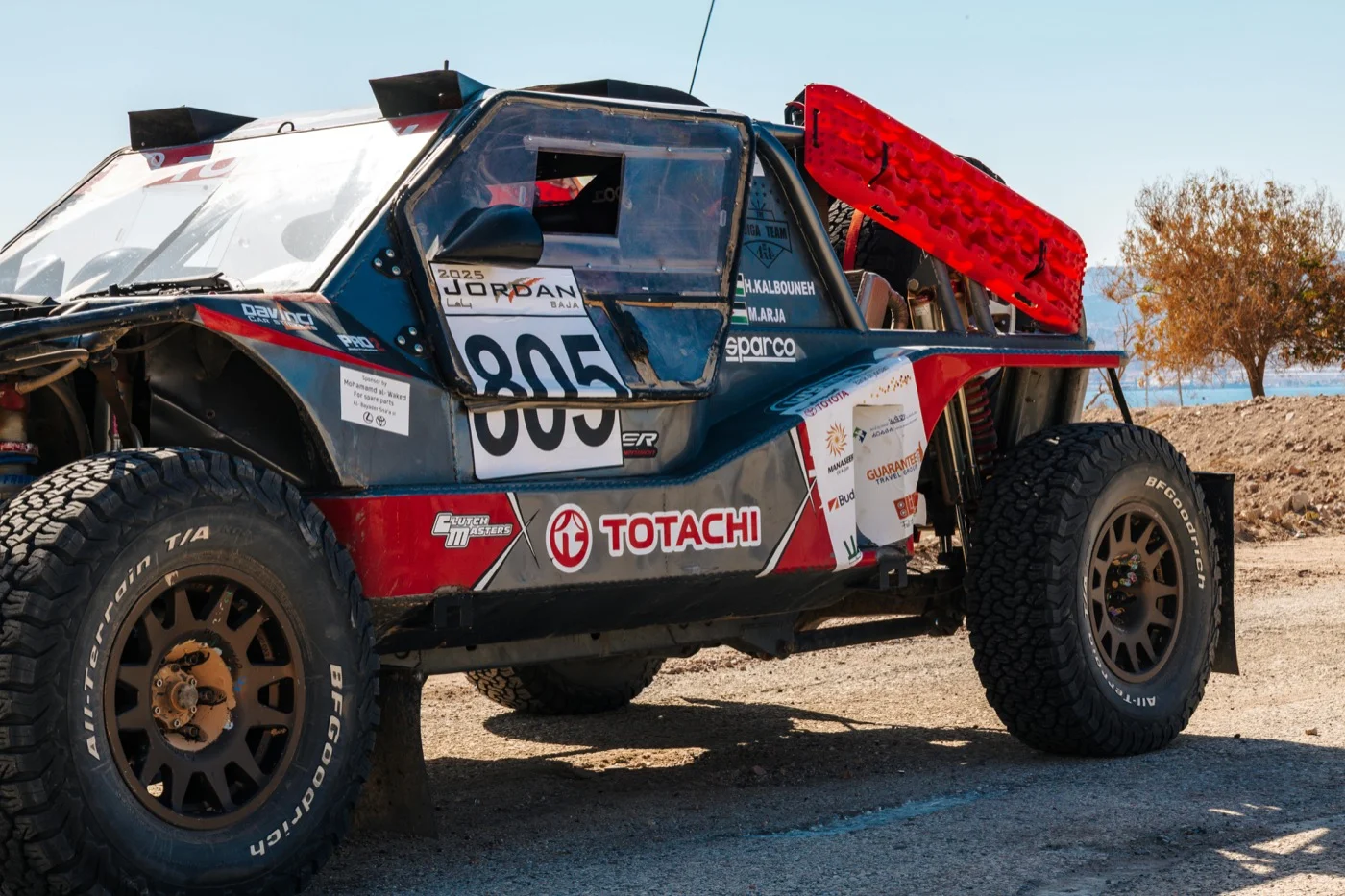
The market has become more competitive in the decade that has passed. SUVs (mostly compact) now account for more than half of U.S. vehicle sales while pickups are another 15%. Both have moved steadily upmarket, which means the tire going under a Silverado 3500HD is now expected to be quieter than what went on a fleet van in the 1990s. And in the last few years, electric trucks have entered the category with battery packs that add over 1,000 lbs to vehicle weight while delivering the kind of instantaneous torque that can spin up a heavy all-terrain tire in half a rotation. And these tires are all still supposed to work on gravel trails, evacuate snow, and last 60,000 miles.
The generation of all-terrain tires now on the market are the industry’s answer to that list of requirements. The BFGoodrich All-Terrain T/A KO3, Falken WildPeak A/T4W, Goodyear Wrangler Workhorse AT2, and Toyo Open Country A/T III represent four divergent engineering philosophies tackling the same market from different angles. The “best” tire is often the best tire for your use case which is why it is important to understand the philosophy by which a tire was crafted.
Understanding the A/T Segments
All four of these tires compete in the Off-Road All-Terrain category. These tires are optimized for variable terrain like gravel, sand, and other surfaces you might find when exploring the wilderness, but also have to balance that with road manners. The engineering decisions that make the Falken A/T4W the right tire for a diesel hauler towing at max capacity are the same decisions that make it a suboptimal choice for an EV owner trying to preserve range.
Off-Road Specialists are designed with the trail as their primary performance target. Puncture resistance, rock grip, and mud evacuation take priority over highway comfort and fuel efficiency. The design brief starts with a worst-case technical trail and works backward toward something tolerable at 70 mph.
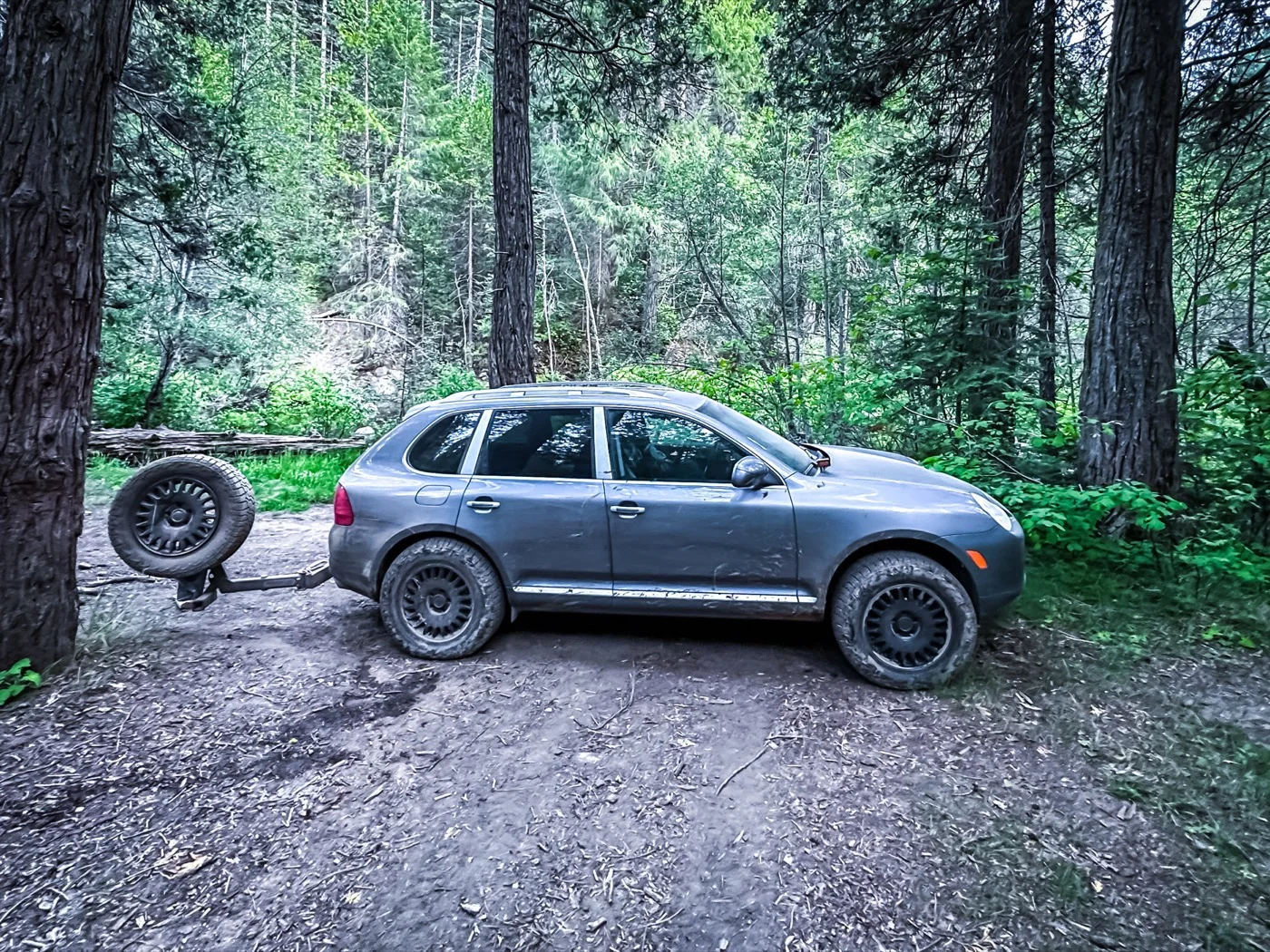
Working Tires are built around payload and towing. Their primary design requirement is carcass integrity under sustained load at high temperature. They need to carry more weight, hold it across long distances, and survive the thermal stress of braking a loaded truck down a long grade. Off-road capability is definitely on the design docket but structural capacity is the engineering priority.
Balanced All-Rounders are the all-terrain category’s version of a compromise. These tires aren’t the fastest off-road, aren’t meant to tow the heaviest loads, and won’t last as long as pure working tires. They do, however, deliver genuinely capable off-road traction, competitive snow performance, and enough on-road refinement to be a pleasant daily commuter.
The Off-Road Specialist
BFGoodrich All-Terrain T/A KO3
For a while now, BFGoodrich has been selling both the KO2 and the BFGoodrich All-Terrain T/A KO3 simultaneously, but that is coming to a close in 2026. The KO3 rollout is a phased production shift, prioritizing high-volume OE sizes first. Dual load index sizes were an explicit gap as production ramped up, but that is no longer the case in April of 2026.
There were those who mourned the loss of the KO2 as they were typically available for 10%-15% less than the KO3. For everyone else, the KO3 makes its case on numbers. The most important one is wet braking. The KO2’s propensity to slide on rain-slicked pavement was its most persistent criticism and the new silica-rich compound with full-depth 3D sipes closes that gap. The KO3 also claims 20% better gravel road durability over its predecessor, meaningful on tires that accumulate most of their hard miles off-pavement, and that longevity may also apply to asphalt and make up for the KO2s relative discount.
The original CoreGard on the KO2 thickened the sidewall rubber compound for toughness. CoreGard Max on the KO3 uses an even thicker sidewall and a different geometry as well. The Advanced Deflection Design shapes the shoulder notch to redirect sharp objects away from vulnerable sidewall zones rather than purely absorbing them through mass. As shown in the table below, size for size the K03 runs from slightly heavier to the same weight as its KO2 predecessor.
| 31×10.5R15 KO3 | 31×10.5R15 KO2 | LT285/70R17 KO3 | LT285/70R17 KO2 | LT285/65R20 KO3 | LT285/65R20 KO2 | |
|---|---|---|---|---|---|---|
| Service Description | 109R | 109S | 116/113S | 116/113S | 127/124S | 127/124S |
| Load Range | C | C | C | C | E | E |
| Tread Depth | 15/32” | 15/32” | 15/32” | 15/32” | 16/32” | 15/32” |
| Tire Weight | 45 lbs | 44 lbs | 51 lbs | 51 lbs | 65 lbs | 61 lbs |
| Tread Width | 8.4” | 8.8” | 9.3” | 9.4” | † | 9.5” |
| Overall Diameter | 30.5” | 30.5” | 32.8” | 32.8” | 34.6” | 34.5” |
Source: Tire Rack and America’s Tire. † Data not supplied.
The tread pattern changes were the source of the most skepticism at launch. The KO3 center tread is tighter than the KO2’s with less void area on a tire marketed partly on mud capability. BFGoodrich offset this with Mud-Phobic Bars, raised ridges in the shoulder grooves that break surface tension on compacted clay as the tire rotates and deforms. Trail reports have generally validated equivalent mud clearing despite the reduced center void. The tighter pattern also eliminates most of the tread squirm responsible for the KO2’s highway hum, which was a consistent complaint. The Krawl-TEK compound remains the KO3’s defining edge on rock. Aired down to 15–20 psi, the sidewall wraps around obstacles and maximizes polymer-to-rock contact. On slick granite where tread block mechanics are secondary to rubber adhesion, the compound is what gets you up the hill.
Complaints of the KO3 are what keep it primarily in the off-road biased side of the Off-Road All Terrain category. Despite improvements to wet traction and a 3PMSF rating, KO3 owners report that wet and light snow traction is still not confidence inspiring. But the largest complaint by far is the inability to get these tires to balance. Road Force Balancing is highly recommended and, even then, owners have complained of vibrations at specific speeds. 1-Star Reviewers have comically mentioned that the KO3s are perfect if you are “looking for that vintage Jeep ride”.
The Working Tires
Working tires share a core philosophy: the carcass matters more than the tread pattern. Grip on loose surfaces is necessary, but not failing under sustained load and heat carries more weight.
Falken WildPeak A/T4W
The A/T3W had a strong decade. It landed in a sweet spot of pricing and off-road capability that made it a legitimate answer for mid-duty truck owners who needed real trail credibility without committing to a heavy-duty carcass. Like the KO2, Falken has been phasing the A/T3W out with the Falken WildPeak A/T4W coming as their replacement.
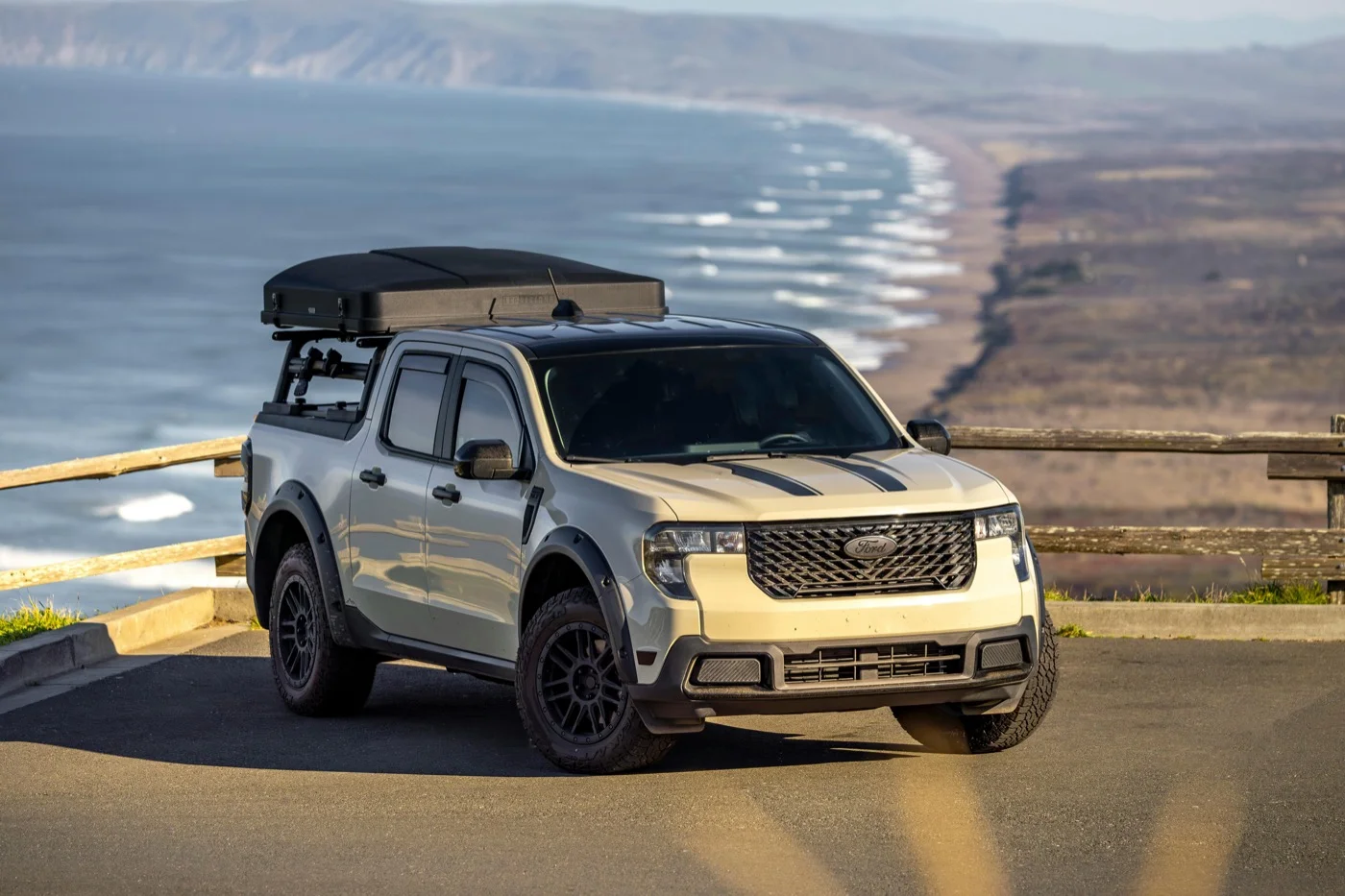
Falken addressed the A/T3W’s wear life criticism directly. A harder, more wear-resistant compound enabled a warranty step-up from the A/T3W’s 55,000 miles to 65,000 miles on P-metric sizes and 60,000 miles on LT sizes for the A/T4W. For tires, more heat equals more wear. The A/T4W features “Heat Diffuser” technology on the lower sidewall uses cooling “fins” to pull heat away from the bead area during sustained towing. That thermal management detail is one that separates a tire designed for repeated long-haul towing from one that just handles it.
WildPeak A/T3W vs. A/T4W — LT285/70R17 Load Range C
| A/T3W | A/T4W | |
|---|---|---|
| Service Description | 116/113Q | 116/113R |
| Load Range | C | C |
| Tread Depth | 18/32” | 18/32” |
| Tire Weight | 63 lbs | 67 lbs |
| Tread Width | 9.6” | 9.6” |
| Overall Diameter | 32.8” | 33.0” |
| Revs. Per Mile | 634 | 632 |
The sidewall improvements are the A/T4W’s update headline. DURASPEC Three-Ply Sidewall Technology wraps two high-ply turn-up layers around the bead and deep into the sidewall, stepping the A/T4W up from the A/T3W’s two-ply construction into territory previously occupied by heavy-duty LT-rated designs. In a common 33-inch fitment like the 285/70R17 shown above, that means approximately 4 lbs more per tire in Load Rating C sizes and up to 7 lbs more in the Load Rating E variants. Unsprung rotational mass at that level affects acceleration, braking response, and the service life of suspension components not designed for the extra inertia. On an HD truck pulling at capacity, those pounds are irrelevant but on something like a 3rd Generation 4Runner it might actually make a difference. By comparison, the Load Rating E A/T4W in 285/60R17 weighs 14 lbs more than the Goodyear Workhorse AT2 in the same size and load rating. That is an unsprung weight difference of 56 lbs.
The performance trade-offs are real. The A/T4W is a better on-road tire than the A/T3W with improved dry braking and excellent road manners. A step up in speed rating from Q (99 mph) to R (106 mph) in a comparable Load Rating C tire also signals advanced heat management (hi, Heat Diffuser) and a stiffer overall construction. The concession is snow. Both carry the 3PMSF rating, but testing suggests the A/T4W gave up a margin of the A/T3W’s class-leading snow braking and lateral handling in exchange for structural rigidity and tread longevity. If your truck sees genuine winter conditions, that tradeoff is worth noting. The heavier carcass also imposes a more noticeable fuel economy penalty for drivers on lighter platforms where the A/T3W’s two-ply construction was a slightly better fit.
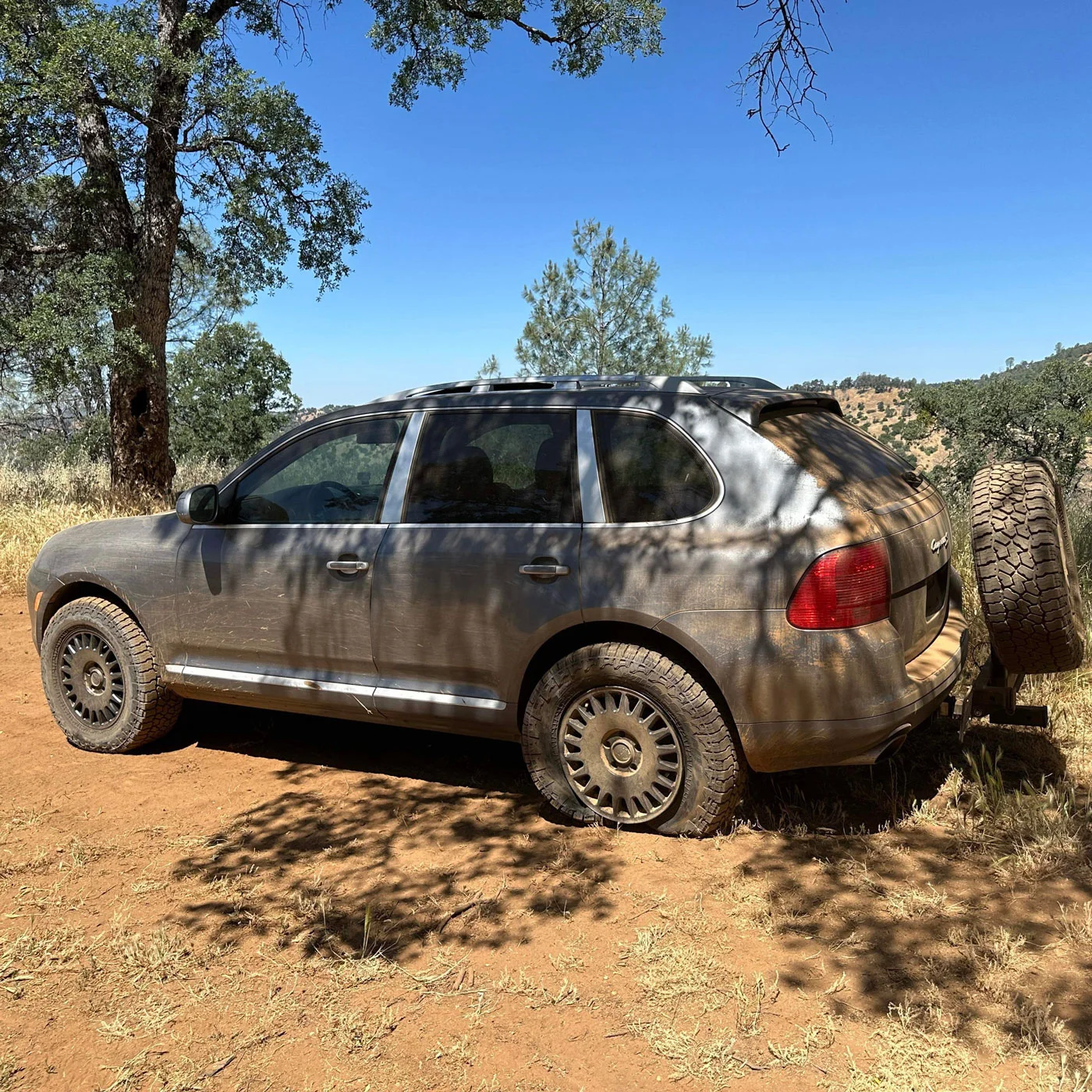
For heavy-duty applications, regular towing, and high-payload work where sidewall integrity is the priority, the A/T4W is the correct choice. Not to say that the tires are invincible, because I have personally destroyed an A/T4W on a rock strewn trail. If you’re on a lighter rig with less power and snow performance and fuel economy outweigh structural rigidity, you may want to look to another tire. Another peculiarity of the A/T4W is that it features a dual sidewall design where one side has raised lettering and the other has recessed raised lettering. If you have vehicular OCD like me, make sure your tire shop is aware of this. And remember, recessed is best.
Goodyear Wrangler Workhorse AT2
Goodyear felt their intentions of making an Off-Road All-Terrain for work were not quite clear so they straight up put it in the name. Goodyear Wrangler Workhorse AT2’s development story had a clear goal. Goodyear’s testing showed wet braking was the primary weakness of the first-generation Workhorse AT. In internal testing, the AT2 stopped nearly 20 feet shorter than its predecessor in 45 mph wet-weather tests and claims an 18% better braking figure. That’s the difference between your insurance rates going up or not.
In the 2025 Tire Rack all-terrain comparison across nine tires, the Workhorse AT2 finished second overall, specifically recognized for wet and dry handling. For a working vehicle that spends 90% of its time on asphalt with occasional job-site or unpaved use, finishing second in a wet braking test matters more than any off-road metric. The Goodyear Wrangler Workhorse AT2 is also designed to resist chipping and chunking. Service vehicles, fleet trucks, and commercial applications where safety margins take precedence over trail capability will appreciate the prioritization of professional job-site durability.
LT285/70R17 Load Range E specification comparison
| KO3 (LR-E) | Workhorse AT2 | A/T4W † | Open Country A/T III | |
|---|---|---|---|---|
| Service Description | 126/123S | 126/123S | 126/123S | 121/118S |
| Load Range | E | E | E | E |
| Max. Load | 3,750 lbs | 3,750 lbs | 3,750 lbs | 3,195 lbs |
| Max. Inflation | 80 psi | 80 psi | 80 psi | 80 psi |
| Tread Depth | 16/32” | 17/32” | 18/32” | 16.5/32” |
| Tire Weight | 59 lbs | 53 lbs | 67 lbs | 55 lbs |
| Tread Width | 9.3” | 9.0” | 9.6” | 9.0” |
| Overall Diameter | 32.8” | 32.8” | 33.0” | 32.8” |
| Revs. Per Mile | 635 | 635 | 632 | 634 |
| Origin | US | US | TH | US |
† DURASPEC 3-Ply HD construction
The 10-ply (Load Range E) and 12-ply (Load Range F) LT variants carry the structural integrity required for max-payload work. Large tread blocks with open grooves and saw-tooth edges provide effective self-cleaning in the mud, gravel, and loose dirt that a working truck will encounter at a job site. The 55,000-mile treadwear warranty is competitive for an LT-rated commercial tire in this category and as a bonus, the Workhorse AT2 typically weighs less than its competitors in size-by-side comparisons.
The tire was released in October of 2025 so long-term reviews are still yet to come, but an acknowledged weakness of the tire is noise vibration harshness, or NVH. The Workhorse AT2 becomes intrusive at highway speeds in ways that the Toyo A/T III and Falken A/T4W manage better. For a work truck, it’s probably a negligible trade off. I have never met an Off-Road All-Terrain that was quiet, but if your rig is more of a dedicated family hauler, it’s something to think about before committing.
The Balanced All-Rounders
Toyo Open Country A/T III
The Toyo Open Country A/T III, often referred to as the AT3, has been a stalwart in the Off-Road All-Terrain conversation and it serves as the jack of all trades, but master of none. And that’s not such a bad thing for a tire. When compared with the BFGs, they are often cited as having better on road traction, manners, and superior wet and snow performance.
Full-depth 3D locking sipes are central to how it achieves the snow result. Traditional 2D sipes allow tread blocks to fold under high torque and braking loads, accelerating wear and reducing control at the limit. The AT3’s 3D multi-wave sipes use internal wave patterns that allow surface flexibility for snow grip while locking together under pressure to maintain a rigid block face for dry handling and braking. BFGoodrich applied the same architecture to the KO3. While the 3PMSF standard only tests longitudinal acceleration in snow, both manufacturers engineered for lateral grip and braking, which is what actually determines winter safety.
Where the Toyo gives ground is in absolute wet and dry braking distances. It is solidly mid-pack in the all-terrain category. What it trades for all out magazine figures it gains in strong hydroplaning resistance. The AT3 floats later in standing water than most of its competitors and holds more lateral acceleration through curved hydroplaning conditions. That distinction matters in practice. Hydroplaning is a sustained-grip problem while emergency stopping distance is a peak-grip problem. If your driving environment involves more standing water and sustained rain than hard urban stops, the AT3’s tradeoff profile fits the conditions.
The AT3’s construction runs lighter than most competitors, sometimes by 10 lbs or more in comparable sizes, as is the case with our example table. Staggered shoulder lugs provide bite across multiple approach angles in loose terrain. The 65,000-mile warranty (P/Euro-metric) and 50,000 miles on LT sizes, combined with the lower rolling resistance, make the total cost of ownership argument straightforward for drivers with genuinely mixed use cases of highway commutes, winter roads, occasional light trail use, and infrequent towing. The AT3 covers all of it without demanding optimization for any single scenario. For those looking for a long-lasting daily tire that is not afraid to tackle dirt, the AT3 is a great choice.
Toyo Open Country A/T III EV
The AT3 EV variant earns a separate section because it is solving a materially different problem. The primary concern for an electric truck owner upgrading to all-terrain tires is range loss. Conventional all-terrain tires impose a 10% or greater range penalty compared to lightweight OEM highway rubber. The AT3 EV’s full-silica compound reduces rolling resistance by over 20% compared to the standard AT3 model.
In real-world testing on a Rivian R1S, the AT3 EV averaged 2.17 miles/kWh against 2.14 miles/kWh for the OEM Pirelli Scorpion AT tires. F-150 Lightning Drivers stepping up from 32-inch OEM highway tires to a 33-inch A/T III EV report a 3–5% range hit. Other all-terrain tires in comparable sizes caused 10% or more.
Open Country A/T III vs. A/T III EV vs. Goodyear Wrangler Territory AT — 275/60R20
| A/T III | A/T III EV | A/T III EV | Goodyear Wrangler Territory AT | |
|---|---|---|---|---|
| Size | LT275/60R20 | LT275/60R20 | 275/60R20 | 275/60R20 |
| Service Description | 123/120T | 123/120S | 116T | 116H |
| Load Range | E | E | XL | XL |
| UTQG | — | — | 600 A B | 580 A B |
| Max. Load | 3,415 lbs | 3,415 lbs | 2,756 lbs | 2,756 lbs |
| Max. Inflation | 80 psi | 80 psi | 50 psi | 51 psi |
| Tread Depth | 16.4/32” | 16.4/32” | 13.5/32” | 11/32” |
| Tire Weight | 54 lbs | 53 lbs | 43 lbs | 42 lbs |
| Tread Width | 9.2” | 9.4” | 9.1” | 8.8” |
| Overall Diameter | 33.0” | 33.0” | 33.0” | 32.9” |
| Revs. Per Mile | 630 | 630 | 651 | 633 |
| Origin | US | US | US | US |
To understand the AT3 EV we turn to the data. Comparing the LT-variant of the AT3’s stats with the AT3 EV and you’ll notice they are pretty much dead even, with a slight weight advantage to the AT3 EV. When you move up to larger tires such as the LT285/55R22, the AT3 weighs in at 62 lbs while the AT3 EV weighs in at 58lbs. While AT3 EV is clearly designed to be lighter but whether or not it is, well, it depends. In a larger OE size, the non-LT AT3 EV tire is indeed lighter than the OE Rivian Pirelli Scorpion AT Plus in the same size, saving 3 lbs. However, the OE Rivian Goodyear Wrangler Territory AT is 1 lb lighter than the AT3 EV. The Goodyear, however, is an On-Road All-Terrain and not an Off-Road All-Terrain. The other thing you’ll notice is that the measured tread width of the SL AT3EV is narrower than all of the other 275/65R20s in the chart. Toyo’s engineers have definitely tried to work on rolling resistance.
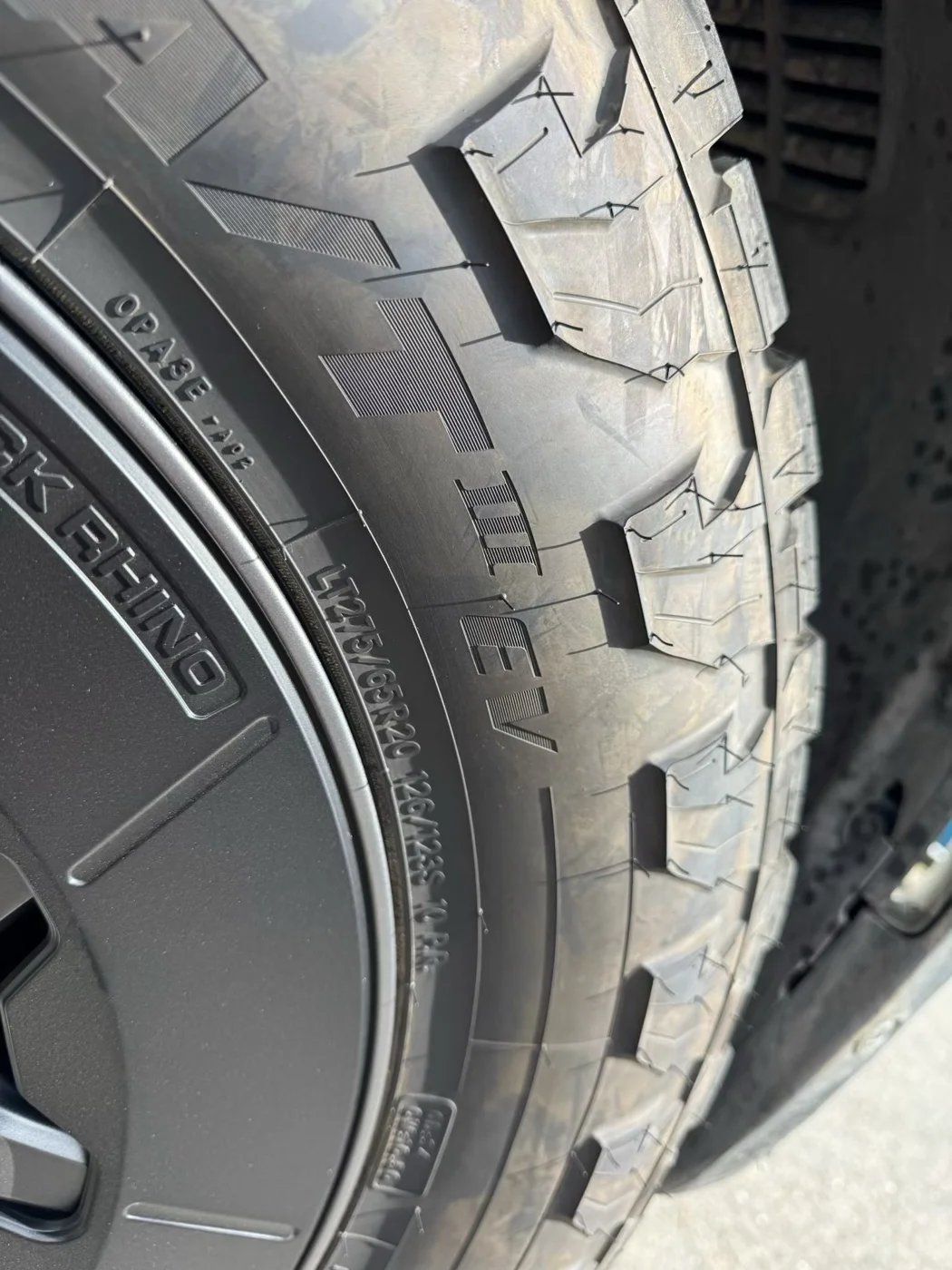
Other features of the AT3 EV are the AeroWing sidewall lug design which reduces wind drag around the tire circumference, more useful for EV owners range maxxing than your typical diesel dually owner. Smooth chamfered shoulder blocks and high-contrast lettering further minimize air turbulence at speed. The computer-tuned variable pitch tread pattern is also designed with EV cabin noise expectations in mind. EV owners are accustomed to suppressed road noise and the AT3 EV is described by owners as quiet relative to the class, absorbing micro-vibration from rough pavement in ways that conventional A/T construction doesn’t optimize for.
The tradeoff in the EV-specific design is off-road aggressiveness. It shares the traditional AT3’s capabilities that fall short of the off-road focused tires like the KO3. But for an EV owner who wants to maintain trail capability from stock without significant range penalties, it’s the best choice. For someone prioritizing maximum off-road performance and willing to live with the range consequences, the KO3 is still the answer.
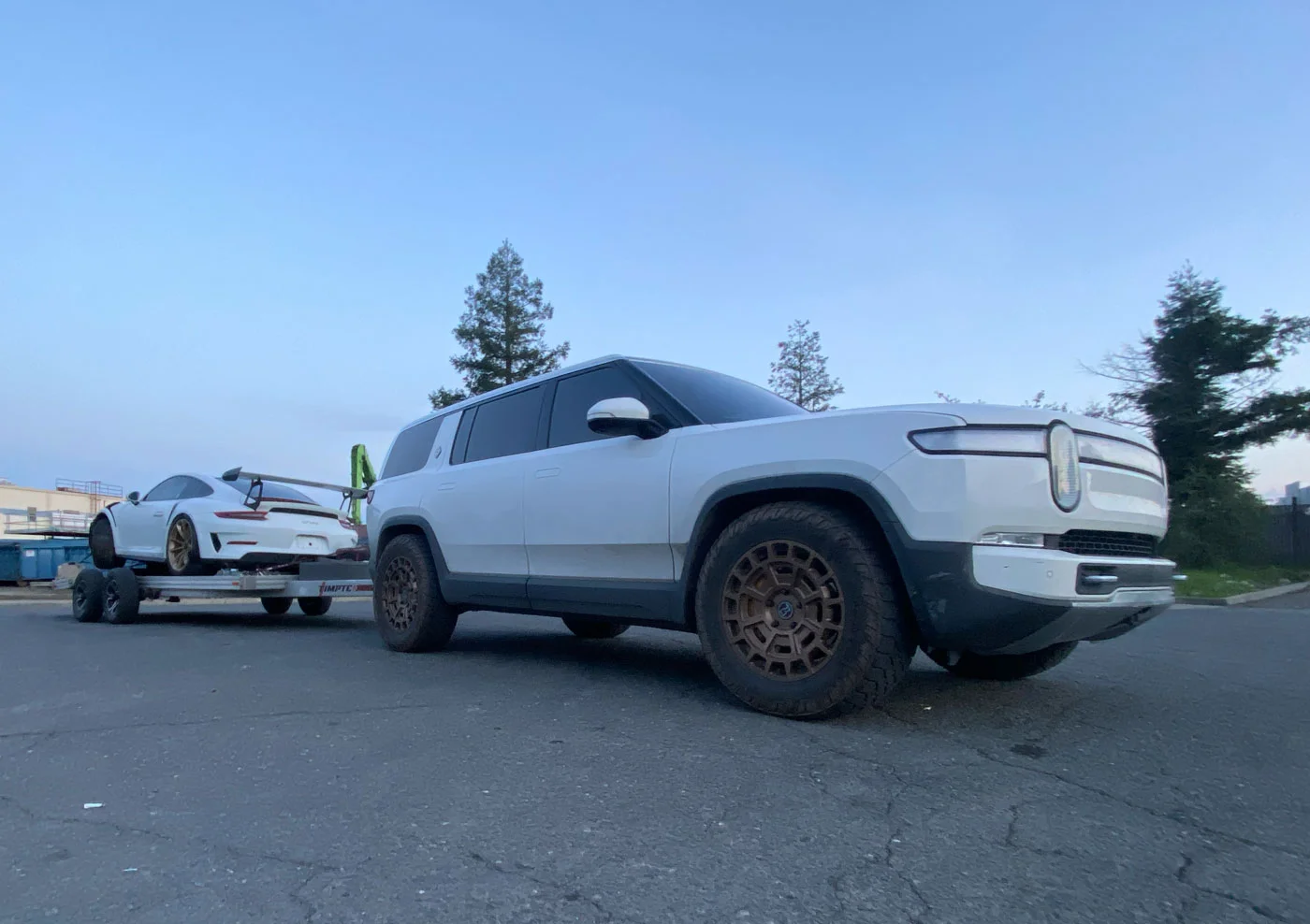
I have had the privilege of burning up backroads in a friend’s Rivian R1S equipped with the AT3 EV and to say they have been abused would be an understatement. Stoplight launches, county road hijinks, working fences on the property, and towing our project cars around have proven their all-around capability - both from longitudinally handling 800+ lb-ft of torque and extreme cornering forces of a near 7,000 lbs SUV loaded up with car parts and a trailer in tow. It handles the abuse.
Which Tire for Which Truck
Having gone through the research the decision tree for Off-Road All-Terrains is easier than it seems.
If your primary goals are Off-Road All-Terrain as the category suggests, look to the BFGoodrich KO3. CoreGard Max, derived from the Baja T/A KR3 racing tire, deflects sharp objects away from sidewall contact zones and the Krawl-TEK compound is formulated for slick rock adhesion. But look out for road manners, as the KO3 is a notoriously hard tire to balance on the wheel.
If you’re hauling your side-by-sides on trail, particularly in warm climates where thermal stress on the carcass is real, the Falken WildPeak A/T4W’s DURASPEC three-ply construction and Heat Diffuser technology are doing structural work that nothing else in this group is engineered to do. Just know you will have to accept the weight penalty for the structural benefit.
If your off-roader doubles as a work truck, the Goodyear Workhorse AT2 is practically a fleet tire. Its reinforced structure maintains the ideal tire shape under max-payload pressures, preventing the deformation and heat buildup that plagues less robust carcasses under sustained commercial use.
For most pickup and SUV owners who want all-terrain capability but primarily stick to pavement, the Toyo Open Country A/T III is where to start shopping. It finishes first in snow handling in independent group tests, carries the lowest rolling resistance in the category, and backs it up with a 65,000-mile warranty in P/Euro-metric sizes. It is not the best at any single thing in this group and that is honestly kind of the point.
Current Tire Pricing
| Size | Tire | Price/Tire |
|---|---|---|
| LT285/70R17 | BFGoodrich All-Terrain T/A KO2 | $312.35 |
| LT285/70R17 | BFGoodrich All-Terrain T/A KO3 | $320.99 |
| LT285/70R17 | Falken WildPeak A/T4W | $299.00 |
| LT285/70R17 | General Grabber A/TX | $319.99 |
| LT285/70R17 | Goodyear Wrangler Workhorse AT2 | Check Price |
| LT285/70R17 | Toyo Open Country A/T III | $348.17 |
Price availability updated May 2026. Actual prices may vary.
Frequently Asked Questions
What is the best all-terrain tire for most drivers in 2026?
For most drivers who want genuine off-road capability, competitive snow traction, and manageable highway manners without optimizing for a single use case, the Toyo Open Country A/T III is a solid all-around performer. It finishes first in snow handling in independent group tests, posting a +19.05% snow traction advantage and +7.89% snow handling improvement over the reference tire, and carries the lowest rolling resistance in the category. It is not the best at any single metric, but it is the most capable across the widest range of scenarios for those that do not live off-road.
What is the difference between the BFGoodrich KO2 and KO3?
The KO3 introduces CoreGard Max, a shoulder geometry adapted from Baja racing architecture using an Advanced Deflection Design that steers sharp objects away from the sidewall rather than absorbing impact through added rubber mass. The KO3 moves to a three-ply carcass in comparable sizes where the previous generation KO2 used two. BFGoodrich claims 20% better gravel road durability over the KO2. The center tread pattern is tighter than the KO2’s, offset by Mud-Phobic Bars in the shoulder grooves — raised ridges that break compacted mud loose as the tire rotates — maintaining equivalent soft-soil traction despite the reduced void area. Sipe density increased from three to five per central lug for improved lateral stability in snow. The KO3 is heavier than the KO2 but lighter than the Falken A/T4W in comparable sizes.
What is the best Off-Road All-Terrain for towing?
The Falken WildPeak A/T4W was engineered for heavy-duty towing through its DURASPEC Three-Ply Sidewall construction, which wraps two high-ply turn-up layers around the bead and extends deep into the sidewall for resistance to splitting under sustained lateral load. Heat Diffuser technology uses cooling fins to pull heat away from the bead area when road surface temperatures push past 140°F during long high-payload hauls. The primary tradeoff is weight: a 33-inch A/T4W runs approximately 67 lbs, a 7-lb increase over the A/T3W, and heavier than most tires in its class. That increased rotational mass will register in suspension component wear and fuel economy on vehicles not spec’d for it.
Is the Goodyear Wrangler Workhorse AT2 worth it?
For professional, commercial, and fleet use it is the correct choice. The Workhorse AT2 posted a second-place finish out of nine tires in Tire Rack’s 2025 All-Terrain Test, noted specifically for wet and dry handling at the front of the category. Its internal wet braking data shows stopping nearly 20 feet shorter than the first-generation Workhorse. The 10-ply and 12-ply LT ratings maintain carcass shape under max-payload pressure that deforms lesser tires, preventing the heat buildup and irregular wear that follows. The tradeoff is noise — professional testers note it becomes intrusive at sustained highway speeds — which is a worthwhile trade for a work truck and a meaningful objection for a daily driver.
What all-terrain tire should I buy for an EV truck or SUV?
The Toyo Open Country A/T III EV is the purpose-built answer. Its full-silica compound reduces rolling resistance by over 20% compared to the standard A/T III model, and the AeroWing sidewall lug design cuts aerodynamic drag at highway speeds. Real-world testing on a Rivian R1S averaged 2.17 miles/kWh against 2.14 miles/kWh for the OEM Pirelli Scorpion AT. F-150 Lightning drivers upgrading from 32-inch OEM highway tires to a 33-inch A/T3 EV report just a 3–5% range hit while other all-terrain tires in comparable sizes impose 10% or more. The two-ply polyester casing with twin steel belts and two nylon cap plies handles instantaneous EV torque delivery without sidewall squish. The NVH profile is tuned for the quiet cabin expectations of electric vehicles.
How long do all-terrain tires last?
The Falken WildPeak A/T4W and Toyo Open Country A/T III both carry 65,000-mile warranties for P-metric sizes; Toyo drops to 50,000 miles for LT and flotation sizes. The Goodyear Wrangler Workhorse AT2 is rated at 55,000 miles. The BFGoodrich KO3 carries a 50,000-mile warranty, the shortest in this group. Actual service life will fall short of warranty figures under heavy use: sustained towing at or near max payload, high-cycle off-road use, and aggressive alignment specifications all accelerate wear. The numbers represent highway-biased mixed-use driving at moderate loads.
Are all-terrain tires good in snow?
3PMSF-rated all-terrain tires perform meaningfully better in snow than standard all-season tires, but they are not a substitute for dedicated winter tires on ice or packed snow. The USTMA’s 3PMSF test only measures longitudinal acceleration on medium-packed snow — it does not assess ice braking, lateral grip, or cornering. In the current generation, the Toyo Open Country A/T III leads in snow handling in independent group tests, narrowly edging out the KO2 in published comparisons. The KO3‘s increase to five sipes per central lug is a direct response to that competition, targeting lateral stability in snow specifically. For regions with consistent ice and packed snow, dedicated winter tires remain the correct answer.
How much do all-terrain tires affect fuel economy?
A switch from a highway all-season to an all-terrain tire typically costs 1–3 MPG in real-world driving, depending on the tire’s weight and rolling resistance. Heavier three-ply tires like the WildPeak A/T4W impose a larger penalty than lighter two-ply designs due to increased rotational inertia and hysteresis. For electric trucks and SUVs, most all-terrain tires impose a 10% or greater range penalty. The Toyo Open Country A/T III EV reduces this to 3–5% through its full-silica low-rolling-resistance compound and AeroWing aerodynamic sidewall lug design.
What is the best all-terrain tire for rock crawling?
While there are better dedicated rock crawling tires, The BFGoodrich All-Terrain T/A KO3 is the best in the Off-Road All-Terrain category. The Krawl-TEK compound is formulated specifically to adhere to slick rock surfaces, and the Linear Flex Zone sidewall wraps around obstacles when aired down to 15–20 PSI, maximizing polymer-to-rock contact points. CoreGard Max provides the puncture and bruise resistance required on a technical trail. No other current all-terrain tire pairs a rock-specific compound with sidewall protection derived directly from Baja racing architecture the way the KO3 does.